
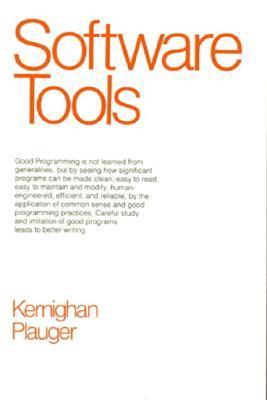
There are a number of excellent computer science books that were written decades ago, and were essential to any programmer’s library, but newer developers may not even know that they exist. Some of these books contain timeless lessons that continue to shape everything we do today. One such book is Software Tools by Brian Kernighan and P.J. Plauger—published in 1976, yet still incredibly relevant for modern software development.
This book isn’t just an introduction to programming; it’s a guide to thinking like a programmer. It teaches the value of small, composable functions, discusses the importance of structured programming, and building reusable tools—all principles that remain foundational, whether you’re writing shell scripts, working with cloud infrastructure, or crafting clean APIs.
Why should you care? If you develop software today, you’re standing on the shoulders of giants—people who helped establish the best practices that still define our field. The authors of this book also wrote other essential references (including much of the Unix operating system) and wrote in a clear and approachable way. Software Tools succinctly shows how simple, well-written code leads to scalable and maintainable systems. Whether you’re diving into Unix internals, building microservices, or scripting automation, the principles in this book are everywhere.
We will take a deep dive into this book and discover the essential and timeless wisdom hidden there, and see how we can apply it in our work today. We’ll see how some of these tools still exist in modern Linux, and how the ideas discussed influenced programming languages, like C and even more modern languages, like Python and Rust.
Some key ideas we’ll explore:
– The power of small tools: Why the Unix philosophy emphasizes writing simple, single-purpose programs that easily connect with one another.
– Understanding character input and output: Concepts that remain crucial for handling file streams, parsing data, and even writing efficient CLI tools.
– Code readability and structure: How naming conventions, proper language idioms, and thoughtful code structure improve readability and maintainability.
– Thinking about edge cases: Why seemingly simple tasks can often hide deeper complexities in software design.
As we work through this book, you’ll see that what seemed like niche technical wisdom from the ‘70s is actually a timeless guide to writing clean, effective software. We’ll start next week!